
Who is searching for 'home nursing care jobs' and what they actually need to decide
If you're reading this, you're most likely a nurse or caregiver evaluating your next move - not a family researching who to let into their home (that's a real but separate audience for this same search term, and worth naming so you know this piece is written for you, not them).
The real decision underneath the search isn't "which company is best." It's more personal than that: which employment path actually fits your income needs, your appetite for flexible versus fixed hours, and whether you'd rather have institutional backing behind you or full independence. Those three factors - income, schedule control, and backing versus autonomy - will matter more to your day-to-day satisfaction than any single employer's brand name. This piece lays out four real paths honestly, side by side, so you can weigh them against your own priorities rather than someone else's pitch.
Option 1: Traditional home care agency employment
This is the path most people picture first: you're hired by an agency, and they place you with client families.
Pros: You typically get a fixed salary or a set per-visit rate determined by the agency, which makes budgeting your own life easier. Scheduling and client-matching admin is handled for you rather than falling on your shoulders. Many agencies also offer some level of training, which can help if you're newer to elder care specifically.
Cons: The agency takes a cut of what the client family actually pays, so your take-home is lower than the headline rate. You have less say over which cases you're assigned - you may not get to choose the family, the condition type, or the location. And because "agency" covers a huge range of operations, employment terms (pay reliability, contract clarity, how you're treated) vary widely depending on the specific agency's reputation and the region you're in.
Option 2: Independent/freelance home nursing
Here, you negotiate directly with families and work for yourself.
Pros: You keep the full fee you negotiate - no intermediary cut. You choose your own hours and which cases to take on, which suits nurses who want maximum control over their schedule and workload.
Cons: There's no built-in system vetting you to families or vetting families to you, so you're the one responsible for establishing credibility with skeptical households, often from scratch each time. You also handle your own scheduling, payment collection, and the awkward parts of client relationships - late payments, unclear expectations - without any backup. Income tends to be less predictable month to month, since it depends entirely on your own networking and word-of-mouth.
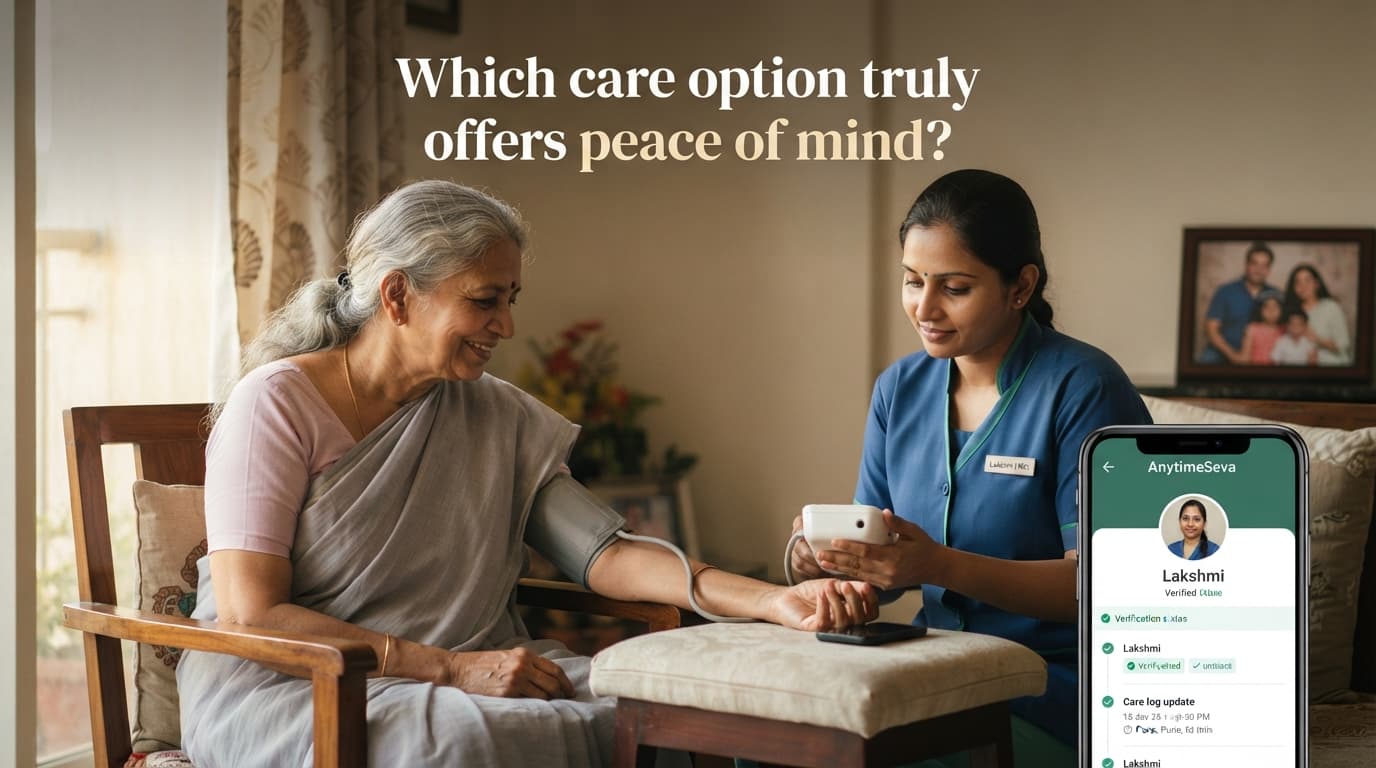
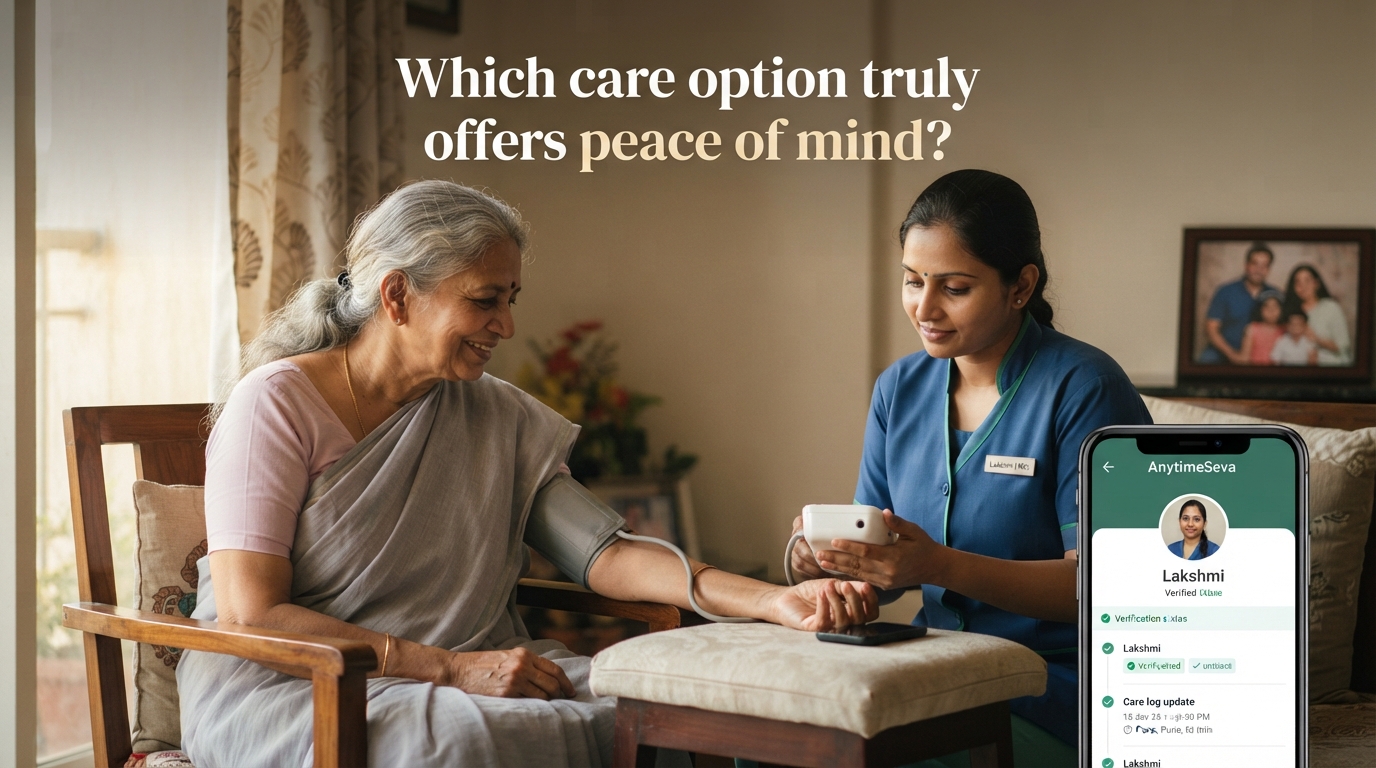
Option 3: Platform-verified caregiving (e.g., AnytimeSeva model)
This is a newer middle path: a platform background-verifies caregivers and connects them with families, while adding tracking and support infrastructure around each placement.
Pros: Because the platform handles background verification upfront, families trust you faster than they would a name they found through a classified ad or a cold referral - the vetting work is already done. Built-in visit tracking and support infrastructure can mean a steadier flow of cases, since families feel more comfortable committing. This model is also particularly useful for reaching NRI families - adult children living abroad who want extra assurance about who's caring for a parent back in India, since they can't be there in person to check credentials themselves.
Cons: You're still working within a platform fee or commission structure, similar in principle to an agency cut. You'll have less day-to-day autonomy than pure freelance work - the platform sets some of the terms of engagement. And, like any model built on family demand, how many cases come your way depends on how much need exists in your specific city at a given time.
Option 4: Hospital or clinic-based home-visit programs
Some hospitals and clinics run their own home-visit nursing programs, usually for post-discharge or short-term follow-up care.
Pros: These roles come with institutional stability - you're an employee of a recognized hospital or clinic system. Some positions include benefits that independent or platform-based work typically doesn't offer. Shifts tend to be structured and predictable.
Cons: These programs typically cover acute or short-term home visits - post-surgical recovery, a course of injections, wound care follow-up - rather than the ongoing, long-term elder care relationships many families actually need. If you're looking to build sustained relationships with elderly clients over months or years, this path generally offers less flexibility to do that, since the institutional mandate is usually episodic care.
Side-by-side: what actually differs across the four paths
Laid out plainly, without ranking one as universally "best":
Income predictability: Agency and hospital-based roles tend to offer the steadiest, most predictable income since pay structures are fixed. Freelance income is the least predictable, tied directly to your own client pipeline. Platform-verified work sits in between - steadier than pure freelance because of built-in trust-building, but still dependent on local demand.
Verification/trust-building effort required of you: Freelance requires you to build credibility with each new family essentially from zero. Agency and platform-verified paths both handle this for you, though through different mechanisms - agency reputation versus platform-run background checks. Hospital-based roles carry the trust of the institution itself.
Scheduling control: Freelance offers the most control - you decide your hours and caseload. Platform-verified work offers meaningfully more flexibility than a traditional agency job, though not unlimited. Agency and hospital-based roles generally offer the least schedule control, since shifts and assignments are set for you.
Access to elder-care-specific (vs general nursing) cases: Agencies and platform-verified models are typically oriented specifically toward ongoing elder care. Freelance nurses can pursue elder care cases directly if that's their focus. Hospital-based programs, by contrast, are usually structured around short-term or acute visits rather than long-term elder care, so if elder care specifically is your goal, this path may offer fewer relevant cases over time.
How to decide based on your own priorities
There's no universally correct answer here - only the answer that fits what you're actually optimizing for right now.
If steady income and less administrative burden matter most to you: agency or hospital-based employment will likely suit you better. You trade some autonomy for predictability and someone else handling the scheduling and client-matching logistics.
If autonomy matters most, and you're confident you can build your own client trust and pipeline: freelance work gives you the most control, at the cost of predictability and built-in credibility.
If you want independence but also want to build trust with families faster than a traditional agency structure allows - particularly useful when working with NRI families who need extra assurance from a distance: platform-verified caregiving is worth a close look. It offers a middle ground between the full autonomy of freelancing and the trust infrastructure of an agency, without requiring you to be a traditional employee.
Whichever path fits your priorities, it's worth going in with clear eyes about the tradeoffs rather than choosing based on which option simply sounds most familiar.
Explore verified caregiver opportunities on AnytimeSeva.
Ready to arrange care for your family?
Send an inquiry